

Our website uses cookies. If you agree with the use of cookies, click the "I agree" button or continue browsing. You can withdraw your consent at any time by changing your internet browser settings and deleting saved cookies. You can read more about cookies. Privacy policy
Sprays offer convenient, topical solutions for flea, tick and odor control for both dogs and cats, and for household areas frequented by pets. Choose products labeled for your animal’s species and follow instructions carefully to avoid irritation. If your pet has persistent symptoms or requires a veterinary diet, consult your veterinarian before using antiparasitic sprays or complementary supplies.
There are 8 products.
Sort by:
Products per page:


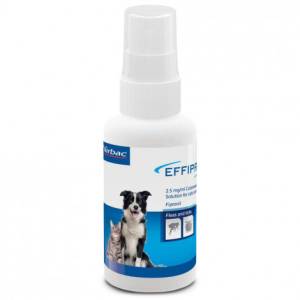


Which sprays are safe for dogs and cats?
Selecting sprays depends on species, age, weight and the problem you want to address. Look for products explicitly labeled for dogs or cats and avoid human formulations. Check active ingredients and contraindications, and consult your veterinarian if your pet has health issues or is taking medication.
How should I apply antiparasitic sprays safely?
Apply sprays in a well-ventilated area, keeping the pet calm and still. Follow label instructions for distance, dose and frequency; avoid eyes, mouth and open wounds. Use gloves and wash hands after application. For kittens, puppies, elderly or pregnant animals, seek veterinary advice before use.
Can sprays be combined with other treatments or diets?
Some sprays can be used alongside topical or oral products, but interactions are possible. Always read labels and avoid overlapping active ingredients. Veterinary diet products or persistent symptoms should be discussed with a veterinarian. Your vet can advise on safe combinations, timing and any risks for pets on medication or special diets.
FAQ / DUK
What types of sprays are available for flea and tick control?
There are antiparasitic sprays, repellents, calming sprays and odor-control products intended for pets. Choose sprays labeled for the correct species and life stage, and check active ingredients. When in doubt, consult your veterinarian to select a suitable option for your pet’s needs.
Are pet sprays safe to use on kittens and puppies?
Many sprays are not recommended for very young animals. Always follow label age and weight restrictions, and avoid products containing strong insecticides on fragile pets. For kittens, puppies or animals with health conditions, consult a veterinarian before use to ensure safety.
How often should I apply antiparasitic sprays to my pet?
Application frequency varies by product and active ingredient. Follow the manufacturer’s instructions precisely and avoid applying more often than recommended. If infestations persist or you’re unsure about timing, ask your veterinarian for guidance rather than increasing application frequency yourself.
Can I use sprays together with other flea treatments or special diets?
Interactions are possible when combining topical products or using multiple antiparasitic methods. Veterinary diet products or persistent symptoms should be discussed with a veterinarian. Your vet can confirm safe combinations and advise on coordinating sprays with oral treatments or medicated diets.
What precautions should I take when applying sprays indoors?
Use sprays in a well-ventilated space, remove people and non-target animals from the area, and ventilate after application. Avoid spraying near food, water bowls, or bedding unless product instructions allow it. Wash hands after use and store products out of reach of children and pets.
Account
-
 For dogs
-
-
-
Leashes and collars
-
-
-
Clothing and accessories
-
-
-
Hygiene and care products
-
-
-
Toys and games
-
-
-
For home and travel
-
-
-
 For cats
-
-
-
Hygiene and care products
-
-
-
Home Equipment
-
Leashes and collars
-
-
-
Pet Transport
-
-
-
Toys and games
-
-
-
 For others
-
-
-
Hygiene and care products
-
-
-
Pet Transport
-
Leashes and collars
-
-
-
Home Equipment
-
Toys and games
-
-
-
 For owner
-
-
Hygiene and care products
-
-
-
 Pet First Aid Kit
-
-
-
-
-
Healthcare products
-
-
-
-
 Beglobiai